
DFR Program Funding: Grants and Budget Paths for Police and Fire Agencies
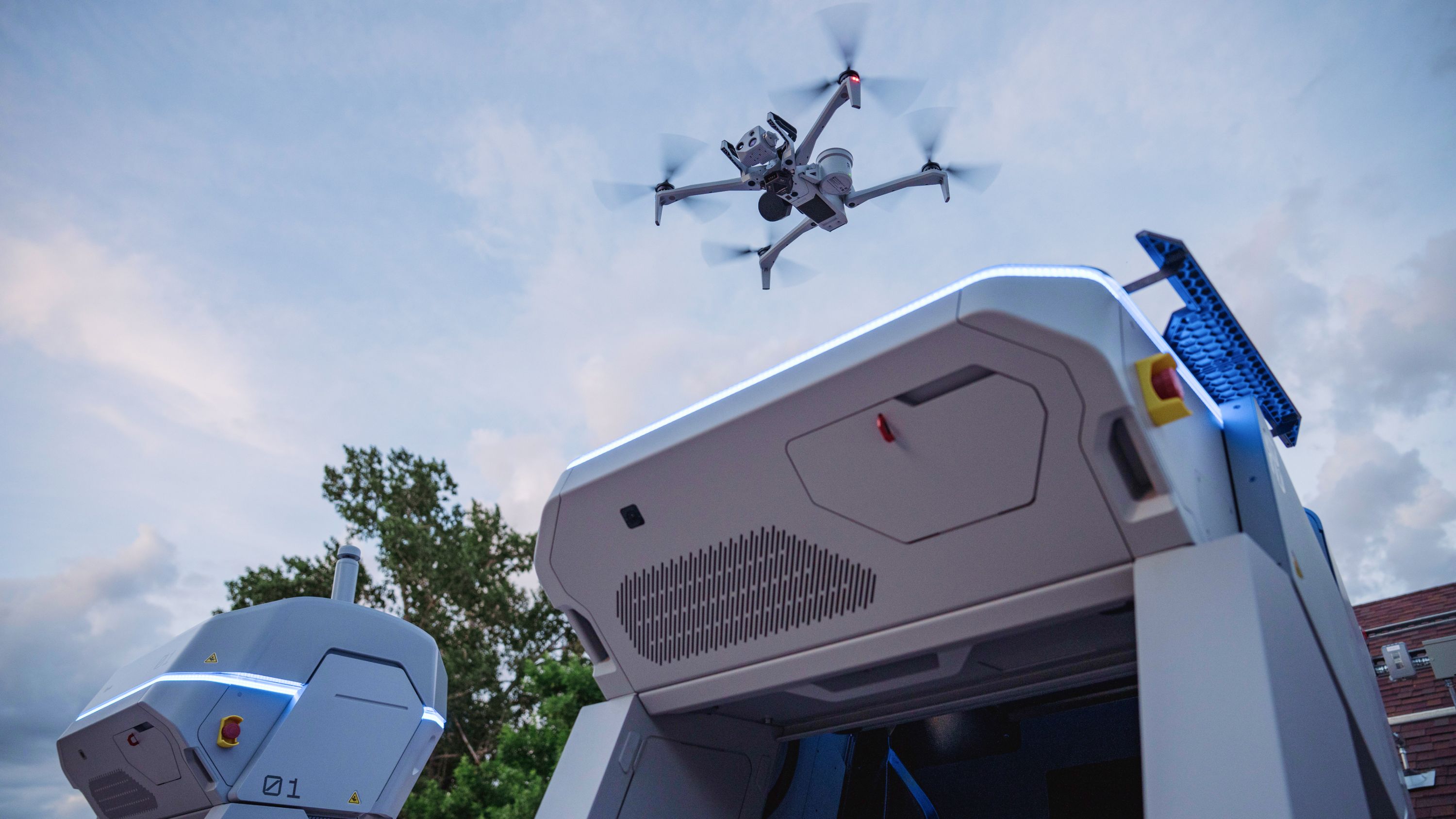
The Skydio Dock and X10, the aircraft and docking infrastructure that DFR budgets must fund.
A Drone as First Responder program can improve response times, officer safety, fireground awareness, missing-person searches, and emergency coordination. The challenge is rarely interest. The challenge is funding the complete operating model.
A successful DFR program requires more than aircraft. Agencies must plan for docks, site work, connectivity, software, evidence management, staffing, training, maintenance, privacy safeguards, and long-term sustainment.
This guide explains how police and fire agencies can build a practical funding strategy for public safety drones, including grants, local budgets, cooperative purchasing, and regional partnerships.
Funding programs, deadlines, eligibility rules, and allowable costs change. Agencies should confirm current requirements with the administering agency, grants office, finance director, procurement officer, and legal counsel before submitting an application or committing funds.
Why Funding Becomes the Real Constraint
Many agencies can justify a DFR pilot. Fewer have planned for what happens after the pilot.
A pilot may demonstrate that an autonomous aircraft can reach an incident quickly and provide live situational awareness. It may not account for recurring software licenses, cloud storage, aircraft replacement, dock connectivity, maintenance, or the personnel required to manage the program.
A complete funding request should address:
- Aircraft and docking infrastructure
- Thermal and other sensor payloads
- Power, network, mounting, and site security
- Fleet management and operational software
- Evidence management integration and video storage
- Fiber, 5G, licensed, or unlicensed connectivity
- Staffing and remote-pilot coverage
- Training and FAA certification
- Maintenance, spares, batteries, and repairs
- Refresh cycles and technology replacement
- Policy development, legal review, and community engagement
The strongest proposals fund the capability, not merely the equipment.

Build the DFR Budget in Categories
Finance directors and grant reviewers need a budget that reflects the full lifecycle of the program.
Hardware and Site Readiness
This category includes aircraft, docking stations, charging systems, payloads, launch infrastructure, mounting, weather protection, physical security, and site preparation.
A dock may require electrical work, network service, rooftop access, structural review, fencing, cameras, or backup power. Those costs should be identified before the application is submitted.
Software and Data Management
DFR operations typically require fleet management, remote flight control, mission planning, mapping, user management, cybersecurity, firmware updates, and system administration.
Video must also move into the agency’s evidence workflow. The budget should identify storage, licensing, export controls, retention rules, audit trails, and integration with records or evidence management systems.
Connectivity and Public Safety Communications
A DFR system depends on reliable communications between the dock, aircraft, remote operator, dispatch environment, and authorized users.
The funding case should evaluate fiber, private 5G, commercial cellular service, licensed or unlicensed wireless links, network redundancy, and cybersecurity controls. These requirements connect DFR to broader public safety communication systems and should be coordinated with the agency’s communications and information technology teams.
Staffing, Training, and Sustainment
Agencies should identify whether the program will use sworn officers, civilian pilots, dedicated dispatch personnel, contracted pilots, or a shared regional staffing model.
The plan should also include initial and recurrent training, FAA requirements, supervisor oversight, maintenance responsibilities, spare equipment, insurance, manufacturer support, and replacement planning.
Funding Pathways for Police and Fire Agencies
No single funding source fits every DFR requirement. Agencies should combine sources based on the mission, timing, and allowable-cost rules.
| Funding pathway | Best fit for a DFR request | Key planning point |
|---|---|---|
| Annual operating budget | Software, connectivity, training, maintenance, staffing, and recurring services | Convert recurring costs into a permanent operating line |
| Capital improvement plan | Aircraft, docks, site work, power, network upgrades, and initial deployment | Match the request to the government’s capital planning cycle |
| City or county general fund | Local match, pilot deployment, sustainment, and policy work | Secure executive and governing-body support early |
| Federal justice grants | Police technology, equipment, training, information systems, and public safety UAS programs where eligible | Confirm certifications, prior approvals, and local eligibility |
| Homeland security and emergency management grants | Regional preparedness, communications, situational awareness, critical infrastructure, and eligible UAS capabilities | Demonstrate a clear connection to the grant’s mission and state priorities |
| UASI and similar programs | High-risk urban area security, major events, critical infrastructure, and regional coordination | Work through the state administrative agency or designated urban area |
| COPS and similar programs | Law enforcement technology, hiring, training, or designated equipment opportunities where applicable | Do not assume an open competition; review the current program notice |
| Byrne-style JAG funding | Law enforcement programs, technology improvement, training, information systems, and public safety UAS programs where allowed | Check allocation status, UAS requirements, and governing-body processes |
| School safety grants | School response, campus security, emergency notification, and interagency readiness | Tie the request to a documented school safety mission |
| Critical infrastructure grants | Protection of utilities, transportation assets, ports, stadiums, and other high-consequence sites | Define the infrastructure risk and measurable mitigation outcome |
| Cooperative purchasing | Complete systems, hardware, software, services, and support through an existing vehicle | Confirm the vehicle’s scope, terms, eligibility, and grant compliance |
The FY 2026 Edward Byrne Memorial Justice Assistance Grant notice, for example, expressly identifies programs to purchase and operate unmanned aircraft systems for public safety. Agencies must still follow the applicable application, certification, procurement, and prior-approval requirements.
The FY 2026 FEMA Homeland Security Grant Program notice includes allowable categories involving information technology, interoperable communications, detection, power, training, and unmanned aircraft capabilities. However, agencies should distinguish a DFR mission from a counter-UAS mission. DFR supports emergency response. Counter-UAS addresses the detection, tracking, or identification of unlawful or hostile drones. They may support related preparedness goals, but they are not the same request.
State-specific opportunities can be especially valuable. Florida’s FY 2026–27 Drones as First Responder program provides a direct example of a state-funded DFR pathway for eligible law enforcement, fire service, and emergency medical agencies. The program includes award limits, reimbursement rules, local match requirements, and a defined performance period. Those details demonstrate why agencies should build a grant-specific budget rather than reuse a generic equipment list.
Write the Funding Case Around the Mission
A strong application answers one question: What documented public safety problem will this capability solve?
Start With Baseline Data
Use measurable local information such as:
- Call-for-service volume and priority types
- Average response times
- Geographic coverage gaps
- Officer or firefighter safety concerns
- Missing-person and endangered-person incidents
- Large-event or critical-infrastructure requirements
- Dispatch workload and available staffing
- Current aviation or mutual-aid limitations
Then define the expected improvement. Examples include faster eyes-on-scene time, improved dispatch decisions, reduced exposure to dangerous environments, expanded search coverage, or improved interagency coordination.
Fund Sustainment, Not Only Acquisition
Grant reviewers and city councils want to know what happens after the award ends.
Include a multiyear sustainment plan covering software, connectivity, storage, maintenance, training, staffing, repairs, spares, and refresh cycles. Identify which costs will move into the operating budget and which may be supported through future grants, shared services, or regional agreements.
Include Policy and Privacy Safeguards
A credible funding case includes:
- Written DFR policy and standard operating procedures
- Authorized mission types and dispatch criteria
- FAA and operational compliance
- Video retention and deletion rules
- Evidence handling and chain-of-custody procedures
- Access controls and audit logs
- Privacy and civil-rights safeguards
- Public reporting and transparency measures
- Community engagement and governing-body review
Funders and councils increasingly view governance as part of the technology investment.

Use Budget-Cycle Tactics That Build Momentum
A phased approach can make a DFR program easier to approve and manage.
Phase one: prove the mission. Fund a limited pilot with defined aircraft, dock locations, connectivity, training, policy work, and performance measures.
Phase two: institutionalize the capability. Present pilot results during the annual budget or capital planning cycle. Convert proven recurring costs into permanent line items.
Phase three: expand coverage. Add docks based on call density, response gaps, geographic coverage, and interagency demand.
Cooperative purchasing and existing government contract vehicles can also shorten the path from funding approval to deployment. Agencies should confirm that the vehicle carries compliant terms, permits the intended purchase, supports the funding source, and is available to the specific public entity.
Consider a Regional DFR Model
A regional model can help smaller agencies overcome staffing and budget limitations.
Possible structures include:
- County-led programs serving multiple municipalities
- Sheriff-led regional response programs
- Shared police and fire deployments
- Multi-agency staffing agreements
- Mutual-aid coverage for neighboring jurisdictions
- Joint procurement and shared maintenance
- Regional evidence and data-management services
The agreement should define ownership, dispatch authority, pilot responsibility, cost sharing, maintenance, data access, evidence handling, liability, and performance reporting.
A regional proposal can also demonstrate stronger utilization. The system serves more residents, supports more agencies, and creates a broader case for public investment.
Avoid These Common Funding Mistakes
- Requesting aircraft without docks, connectivity, or site work
- Funding the pilot without a sustainment plan
- Omitting training, FAA certification, or recurrent proficiency
- Failing to explain the evidence and video workflow
- Using broad claims instead of local call-for-service data
- Mixing DFR and counter-UAS objectives without separating the budgets
- Ignoring privacy, retention, transparency, and community engagement
- Failing to identify measurable outcomes
- Assuming a grant permits every technology or service category
- Choosing a platform before confirming procurement and compliance requirements
A Practical DFR Funding Checklist
Before submitting a budget request, confirm that the proposal includes:
- Documented mission need and baseline data
- Aircraft, docks, payloads, and site requirements
- Power, network, connectivity, and cybersecurity
- Software, storage, evidence integration, and licensing
- Staffing model and operating coverage
- Training, FAA requirements, and recurrent certification
- Maintenance, spares, repairs, and refresh planning
- Written policy, retention rules, and access controls
- Privacy, transparency, and community engagement plan
- Performance measures and reporting process
- Local match and long-term operating budget
- Procurement path and compliant contract vehicle
- Interagency agreements, if regional deployment is proposed
Build the Funding Case Before the Purchase Request
A DFR program becomes fundable when the agency presents a complete operating capability: a defined mission, measurable outcomes, responsible governance, sustainable funding, and a procurement path that can withstand review.
Grace3 Technologies supports U.S. public sector agencies and technology partners with customized public safety technology, connectivity, autonomy, records management, cybersecurity, and procurement acceleration. As a Skydio reseller, we help agencies evaluate DFR platforms, supporting infrastructure, communications, evidence workflows, and lifecycle requirements.
We provide access to a documented portfolio of contract vehicles and can deliver compliant quotes in 45 minutes or less, helping agencies move from a documented need to an actionable procurement plan.
For the operating model behind DFR, review Grace3’s DFR and drone resources, including the cluster anchor post, “What Is a Drone as First Responder Program? How DFR Works in a Police Department.” Further guides in the series, covering a defensible DFR policy and BVLOS for public safety, are being added to the cluster.
Explore Grace3 Technologies’ procurement vehicles or request a public sector quote to begin building a DFR funding and acquisition plan.